Blog
Why EVs Are Faster in 0-60 Sprints

In the world of automotive performance, one metric has become synonymous with speed and exhilaration: the 0 to 60 mph time. For decades, internal combustion engine (ICE) vehicles, from muscle cars to supercars, ruled this domain. However, with the rise of #electricvehicles (#EVs), the game has changed dramatically. EVs are now redefining what it means to be fast, consistently outperforming traditional combustion engines in the race from a standstill to highway speeds. But why are EVs so dominant in this arena? Let’s explore the science and engineering behind their superior performance.
Instant Torque: The Key Advantage
At the heart of an EV’s blistering 0-60 performance is its electric motor, which delivers power differently from a combustion engine. Electric motors generate maximum torque—the force that drives a car forward—instantaneously, as soon as you hit the accelerator. In contrast, combustion engines rely on a series of controlled explosions to produce power, which then passes through various components like a transmission and drivetrain. This process takes time, and torque builds gradually as the engine revs up to its optimal power band.
With EVs, there’s no lag. Whether you’re driving a Tesla Model S Plaid or a Lucid Air Sapphire, the electric motor delivers its full torque from zero rpm, providing rapid and seamless acceleration.
Simpler Drivetrains, Faster Response
Another significant advantage of EVs lies in their drivetrain design. Electric vehicles typically use a single-speed transmission or direct-drive system, which eliminates the need for gear shifting. This simplicity reduces mechanical losses and ensures that all the motor’s power is sent directly to the wheels almost instantaneously.
Combustion engines, on the other hand, rely on multi-speed transmissions to manage power delivery efficiently. Shifting gears introduces delays, even with advanced automatic or dual-clutch systems. This delay, though often imperceptible to the average driver, adds up in high-performance scenarios.
Lower Center of Gravity and Weight Distribution
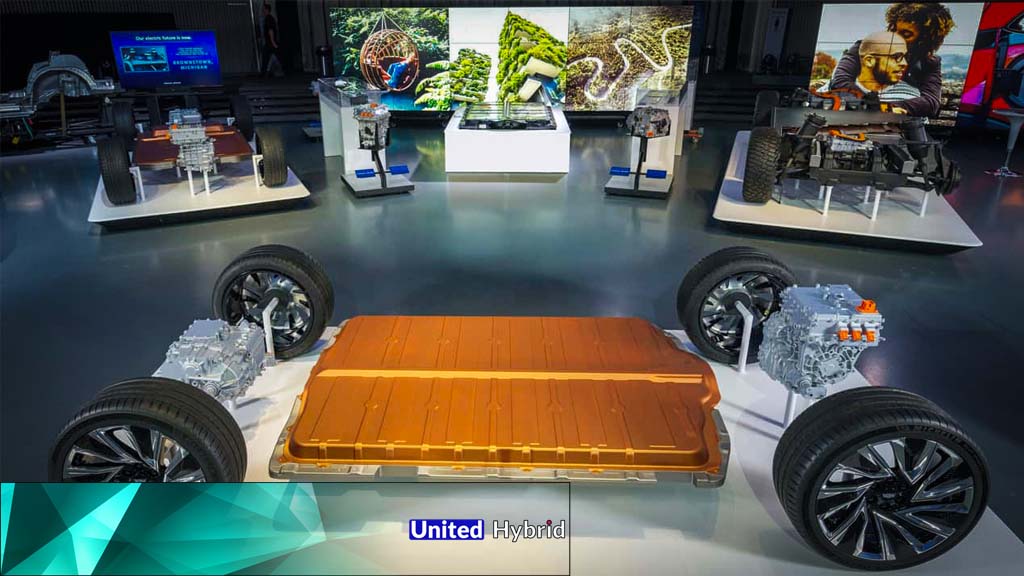
Most EVs have their battery packs mounted low in the chassis, providing a lower center of gravity compared to ICE vehicles. This design not only improves handling but also enhances traction during hard acceleration. Additionally, many high-performance EVs use all-wheel-drive (#AWD) systems, with separate electric motors powering the front and rear wheels.
This AWD setup allows EVs to distribute torque more effectively between the wheels, maximizing grip and minimizing wheel spin. Combustion-engine vehicles, even those with AWD systems, cannot match the precision and speed of torque delivery that electric motors offer.
Efficiency in Energy Conversion
Electric motors are far more efficient at converting stored energy into motion than combustion engines. While an ICE wastes a significant amount of energy as heat, EVs utilize nearly all the energy from their batteries to power the car. This efficiency directly translates to faster acceleration and better overall performance.
Aerodynamics and Instant Power Delivery
Modern EVs are designed with aerodynamics in mind, often featuring sleek, futuristic designs to minimize drag. Reduced air resistance helps EVs maintain high performance throughout their acceleration. Coupled with the instant power delivery of electric motors, this aerodynamic efficiency ensures EVs stay ahead in the 0-60 race.
Regenerative Braking: A Hidden Advantage
While not directly tied to acceleration, regenerative braking systems in EVs play a role in overall performance optimization. These systems recover energy during deceleration and store it in the battery, which can then be used for subsequent acceleration. Although combustion engines have no comparable mechanism, this added efficiency loop allows EVs to maintain consistent performance even during repeated acceleration and braking cycles.
The Role of Advanced Software and AI
Performance in modern EVs isn’t just about hardware—it’s also about software. EV manufacturers employ advanced algorithms to optimize motor control, torque distribution, and traction. Tesla’s #TrackMode and Rimac’s torque vectoring systems are prime examples of how software elevates EV performance to unprecedented levels.
These systems analyze road conditions, driver input, and vehicle dynamics in real-time to ensure every ounce of available power is used effectively, especially during acceleration.
Combustion Engines: Why They Struggle in 0-60
While combustion engines shine in other areas, such as sustained high-speed driving or the visceral thrill of engine sound, their mechanical complexity and inherent inefficiencies make them less competitive in short sprints. Factors like turbo lag, gear shifts, and power band limitations hinder their ability to deliver instant acceleration.
High-performance ICE cars, such as the Bugatti Chiron or Lamborghini Aventador, achieve impressive 0-60 times, but only after overcoming these limitations with specialized engineering, such as turbochargers, superchargers, or hybrid powertrains. Despite these efforts, they struggle to match the effortless and consistent acceleration of EVs.
What Does This Mean for the Future of Performance Cars?
The dominance of EVs in 0-60 acceleration is a glimpse into the future of performance vehicles. With advancements in battery technology, motor design, and AI-driven systems, the gap between EVs and ICE vehicles is expected to widen even further.
Automakers are already leveraging these advantages to create record-breaking cars, such as the Tesla Model S Plaid, which accelerates from 0 to 60 mph in under 2 seconds, and the Rimac Nevera, a hypercar boasting similar figures. As the industry continues to innovate, EVs are poised to redefine what it means to be a high-performance car.
Conclusion: A Revolution in Speed
The reasons behind EVs’ superior 0-60 performance boil down to fundamental differences in how they generate and deliver power. Instant torque, simplified drivetrains, advanced software, and cutting-edge design make EVs unparalleled in short-distance acceleration.
As electric vehicles continue to evolve, they are not only setting new benchmarks in speed but also challenging traditional notions of automotive excellence. Whether you’re a speed enthusiast or an everyday driver, EVs are proving that the future of mobility is as thrilling as it is sustainable.